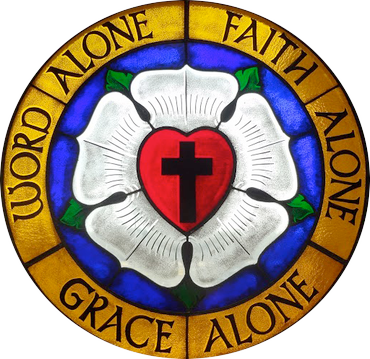
Chapter 27: Living Free — Baptismal Identity and the Means of Grace
“I have been crucified with Christ. It is no longer I who live, but Christ who lives in me. And the life I now live in the flesh I live by faith in the Son of God, who loved me and gave himself for me.” — Galatians 2:20 (ESV)
The Other Side
Let me paint a picture.
You wake up in the morning. The alarm goes off. You reach for your phone — and there is no dread. No checking to see if you deleted the browser history. No residue of shame from what you did the night before. No bargaining with God: “I know, I know, I’m sorry, I’ll try harder today.” None of that. Just… morning. Coffee. Sunlight. The ordinary holiness of a new day.
You pray. Not the frantic, guilt-soaked prayer of a person trying to outrun their last failure, but the quiet, grateful prayer of a child talking to a Father who loves him. “I thank You, my heavenly Father, through Jesus Christ, Your dear Son, that You have kept me this night from all harm and danger.” Luther’s Morning Prayer. Simple. True. Sufficient.
You go to work, and your mind is clear. Not fractured by the dopamine hangover, not foggy from a night of compulsive consumption, not distracted by the constant low-level buzz of craving. You can concentrate. You can be present. You can think in straight lines.
You come home, and you are there. Not mentally elsewhere, not guarding your phone, not living a double life. You look your spouse in the eyes and there is nothing to hide. You play with your children and you are actually playing — not performing normalcy while your mind is in a far country. You sit at the dinner table and the food tastes good. The conversation is interesting. The evening stretches out before you like a gift rather than a minefield.
You go to bed at a reasonable hour because you are not staying up to pursue a ritual that steals your sleep and leaves you emptier than before. You lie in the dark and your mind is quiet. You are at peace. Not the anxious “peace” of a person who has just finished a session and is trying not to think about what they’ve done, but genuine peace — the peace of a person who has nothing to run from and nothing to hide.
This is not a fantasy. This is the other side. This is what life looks like when the trap is broken. And I describe it in such ordinary terms on purpose, because that is precisely the point. Freedom is not a dramatic mountaintop experience. It is the restoration of ordinary life — the life that porn was quietly, systematically stealing from you while whispering that it was giving you something.
What Porn Stole — and What Freedom Returns
Let me be specific about what you get back. Not in the abstract. Concretely. In your body, your mind, your relationships, and your soul.
Energy
Pornography use is metabolically and neurologically expensive. The dopamine cycling — arousal, escalation, release, crash, craving, repeat — burns through your neurochemical reserves like a furnace. The result is chronic fatigue, not the kind that sleep fixes, but the deep, bone-level exhaustion of a system that has been artificially revved and depleted over and over again. Many users don’t even realize how tired they are because they’ve been running on fumes for so long that fumes feel normal.
When you stop, the energy returns. It takes a few weeks for the neurochemistry to stabilize, but when it does, you will be startled by how much more capacity you have. You will wake up rested. You will have sustained focus through the afternoon. You will have reserves at the end of the day instead of collapsing into the couch with nothing left. This isn’t a placebo effect. It’s the measurable result of a dopamine system returning to baseline — no longer depleted by supernormal stimulation, no longer crashing after artificial spikes.
Confidence
Shame is the most corrosive force in the human personality. It doesn’t just make you feel bad about what you did — it makes you feel bad about who you are. And porn, because of its secrecy and stigma, generates industrial quantities of shame. Every session is followed by a wave of self-contempt. Every lie to a spouse or friend reinforces the belief that you are fundamentally dishonest. Every failed attempt to quit confirms the suspicion that you are weak, broken, beyond repair.
Freedom dissolves this. When the secret is gone — when there is nothing to hide, nothing to manage, nothing to lie about — your sense of self begins to rebuild. You look people in the eye again. You stop flinching when someone picks up your phone. You stop living in constant fear of being discovered, because there is nothing to discover. The confidence that returns is not arrogance — it’s integrity. The Latin root means “wholeness.” You become one person, the same in public and private, and the relief of that wholeness is almost physical.
Concentration
Hypofrontality — the weakening of the prefrontal cortex through chronic overconsumption of supernormal stimuli — impairs executive function, which includes attention, planning, decision-making, and impulse control. Heavy porn users often report an inability to concentrate on tasks, a tendency to zone out, difficulty reading books they used to enjoy, and a general mental fog that they can’t quite explain.
As the prefrontal cortex strengthens during recovery, these functions return. You can read again. You can follow a conversation without your mind drifting. You can work on a project for sustained periods without the nagging pull of distraction. You can make decisions clearly and follow through on them. This cognitive restoration is one of the most practically significant benefits of freedom, and it unfolds gradually over months as the neural connections in the prefrontal cortex thicken and strengthen.
Relationships
Pornography poisons relationships through at least three mechanisms. First, it creates secrecy, and secrecy breeds distance. You can’t be fully intimate with someone from whom you’re hiding a major part of your life. Second, it rewires your sexual response to prefer screens over people — the pixels are always available, never demanding, endlessly novel, and perfectly calibrated to your escalated tastes. A real human being cannot compete with that, and the user gradually withdraws from real intimacy, often without knowing why. Third, it generates a low-grade irritability and emotional flatness that makes the user a worse spouse, parent, and friend. The dopamine depletion leaves little capacity for genuine warmth.
Freedom reverses all of this. The secrecy lifts. The sexual response recalibrates to real people, real touch, real connection. The emotional capacity expands as the neurochemistry normalizes. You become present, available, warm — the person you were created to be, the person your loved ones have been missing.
Sexual Function
This is awkward to discuss, but too important to omit. Chronic pornography use frequently causes sexual dysfunction in men — erectile dysfunction, delayed ejaculation, inability to become aroused with a real partner, or arousal only to the specific genres that the user’s escalation led them to. These are not psychological problems in origin — they are neurological. The brain’s reward circuitry has been trained to respond to screen-based stimuli and no longer responds normally to real-life stimuli. This is desensitization in its most clinically visible form.
Recovery takes time — typically three to six months for significant improvement, sometimes longer depending on the severity and duration of use. But the brain is plastic. It can rewire. As supernormal stimuli are removed and normal stimuli are re-introduced, the reward circuitry recalibrates. Normal arousal returns. Function is restored. Many men report that their sexual relationship with their spouse becomes better than it has been in years — because for the first time in years, their brain is responding to a real person rather than comparing her unfavorably to an artificial standard.
Joy in Ordinary Things
This is perhaps the most surprising benefit, and the one that ex-users mention most often. When your dopamine system is constantly being blasted by supernormal stimuli, ordinary pleasures fade. Food is less satisfying. Music is less moving. Nature is less beautiful. Conversation is less interesting. Everything seems grey and flat, and you don’t know why — because you’ve been living in the grey for so long that you’ve forgotten what color looks like.
Receptor upregulation — the recovery of your D2 dopamine receptors to normal sensitivity — brings the color back. A walk in the park is genuinely pleasant again. A home-cooked meal is satisfying. A good book is absorbing. A joke is funny. A sunset is beautiful. These are the native pleasures of human life, the ones God wired into your brain from the beginning, and they were being drowned out by the artificial flood. When the flood recedes, the native pleasures emerge, and the world becomes vivid again.
Self-Respect
This is the sum of all the above. When you are free — genuinely free, not white-knuckling — you respect yourself again. Not in an arrogant way. In a simple, quiet way. You are living with integrity. You are present in your relationships. You are functioning at your cognitive capacity. You are a person you would be comfortable introducing to yourself. That may sound strange, but addicts understand it: the self-fragmentation, the sense that the person doing the shameful thing in private is a stranger who has hijacked your body. Freedom ends the fragmentation. You are one person again. And that person is someone you can live with.
The Means of Grace for the Ongoing Journey
Everything I have described above — the restoration of energy, confidence, concentration, relationships, function, joy, and self-respect — is real. It happens. It is measurable. Neuroscience confirms it.
But you are not just a brain. You are a body-and-soul creature, baptized into Christ, sustained by His gifts, and headed for resurrection. The neurological recovery is significant. But the spiritual sustenance is essential. And for a Lutheran Christian, spiritual sustenance comes through specific, tangible, God-given channels that we call the means of grace.
These are not “things you should do.” These are not Law — not demands placed on you that, if you fail to meet them, will cause your freedom to collapse. They are Gospel: gifts that God gives you, channels through which His Spirit works, means by which He delivers forgiveness, strengthens faith, and sustains the new life He created in you at the font.
Let me walk through them.
The Word of God
“Man shall not live by bread alone, but by every word that comes from the mouth of God” (Matthew 4:4).
Daily Scripture reading is not a duty you perform to stay in God’s good graces. It is a lifeline. It is the means by which God speaks to you — personally, presently, into the specific circumstances of your life. His Word is “living and active, sharper than any two-edged sword” (Hebrews 4:12). It does things. It creates faith. It kills the old Adam. It raises the new man. It reveals truth. It exposes lies.
When you read Scripture, you are not just gathering information about God. You are encountering God. The Holy Spirit works through the Word — not around it, not apart from it, but through it. This is a distinctive Lutheran emphasis, and it matters enormously for your freedom. You are not trying to generate spiritual feelings through your own effort. You are placing yourself in the path of God’s active, dynamic, life-giving Word and letting it do what it does.
What should you read? Romans 6-8 is a masterclass in baptismal identity and freedom from sin. The Psalms are the prayer book of the Church — raw, honest, covering every human emotion from despair to ecstasy. The Gospels show you the face of Christ — the one who touched lepers, forgave prostitutes, ate with sinners, and died for the ungodly. Read whatever draws you. But read. Not because you “have to” — because God feeds you through it.
The Word feeds your soul what porn only pretended to feed. Porn promised comfort — the Word delivers “the God of all comfort, who comforts us in all our affliction” (2 Corinthians 1:3-4). Porn promised excitement — the Word unveils the drama of cosmic redemption, the story that every other story is a shadow of. Porn promised intimacy — the Word reveals a God who knows you fully, loves you completely, and will never leave you or forsake you (Hebrews 13:5).
Holy Baptism
“Do you not know that all of us who have been baptized into Christ Jesus were baptized into his death? We were buried therefore with him by baptism into death, in order that, just as Christ was raised from the dead by the glory of the Father, we too might walk in newness of life” (Romans 6:3-4).
Luther had a daily practice that I want you to adopt. Every morning, he would make the sign of the cross and say: “I am baptized.” Not “I was baptized” — as though it were a past event with fading relevance — but “I am baptized,” because the reality of baptism is present tense. The old Adam was drowned there, and he keeps being drowned there, every day, as you return to the baptismal promise through repentance and faith.
This is not metaphor. Lutheran theology insists — with Scripture — that baptism actually does something. It is not merely a symbol of something that happened in your heart. It is a means of grace — a vehicle through which God delivers His gifts. In baptism, you were united with Christ’s death and resurrection. Your old self was crucified with Him (Romans 6:6). A new self was raised with Him. This happened. It is real. It is as real as the water that was poured on your head, as real as the words that were spoken over you, as real as the Triune God who claimed you as His own.
When temptation whispers — when the little monster sends its signal, when the big monster tries to spin the signal into desire — respond with Luther’s declaration: “I am baptized.” It is not a magic formula. It is a statement of ontological reality. You are telling yourself — and telling the devil — who you actually are. Not an addict. Not a slave. Not a hopeless case. A baptized child of God, dead to sin, alive to God in Christ Jesus.
Develop this habit. Make it the first thought of your morning. When you wake, before you reach for your phone, before you check your email, before you do anything else: make the sign of the cross and say, “I am baptized.” Let the reality of it settle into your bones. The old Adam was drowned. You are a new creation. This is who you are today.
The Lord’s Supper
“This is my body, which is given for you. This is my blood of the new covenant, which is shed for you for the forgiveness of sins. This do, as often as you drink it, in remembrance of me.”
The Lord’s Supper is not a memorial meal in which you think about Jesus while eating bread. It is, as Luther confesses in the Small Catechism, “the true body and blood of our Lord Jesus Christ, under the bread and wine, instituted by Christ Himself for us Christians to eat and to drink.”
Christ Himself — His true body and blood — enters you. Physically. Sacramentally. Really. The early church father Ignatius of Antioch called the Eucharist “the medicine of immortality, the antidote against death.” This is not metaphor any more than baptism is metaphor. It is the incarnate God, who took on flesh to save flesh, continuing to come to you in flesh — His flesh, given for you, His blood, shed for you.
When you feel weak — when the temptation is persistent, when the little monster is louder than usual, when you wonder whether you can sustain this freedom — go to the altar. Kneel. Open your hands. Receive Christ Himself. He enters your body and your soul. He strengthens your faith. He confirms His forgiveness. He binds Himself to you in a union more intimate than any earthly relationship.
You are not fighting this battle with mere ideas and techniques. You have sacramental power — God’s own gifts, delivered physically, tangibly, into your mouth and into your heart. The world, the flesh, and the devil are real opponents. But they are outmatched by the Real Presence of Christ in His Supper.
Go to the Lord’s Supper frequently. Go as often as it is offered. Go not because you are worthy — you are not, and that is the point. Go because you are invited. Go because Christ bids you come. Go because the forgiveness He gives you there is the very thing that sustains your freedom.
Confession and Absolution
We discussed this at length in Chapter 26, so I won’t repeat everything here. But I want to reframe it: confession is not just an emergency measure for when you fall. It is an ongoing practice for the healthy Christian life.
Think of it like a regular medical checkup. You don’t go to the doctor only when you’re in the emergency room. You go for preventive care — to catch small problems before they become big ones, to maintain health, to have a professional assess what you can’t see yourself.
Regular confession to your pastor serves the same function. It keeps short accounts with God — not because God is keeping score, but because sin festers in the dark and heals in the light. It gives you a regular opportunity to hear the absolution spoken over you: “I forgive you all your sins in the name of the Father and of the Son and of the Holy Spirit.” And hearing those words — not in the abstract, not in a book, but spoken aloud, by a called and ordained servant of God, directed specifically to you — strengthens your faith in ways that nothing else can.
Make confession a regular practice. Monthly, perhaps, or quarterly. Not as a burden. As a gift. As one of the privileges of being a Lutheran Christian.
The Communion of Saints
“Bear one another’s burdens, and so fulfill the law of Christ” (Galatians 6:2).
You are not alone. You belong to the body of Christ — a community of baptized sinners who are being sanctified together. The devil loves isolation. He knows that when you are alone, his whispers are the only voice you hear. He knows that secrecy is the soil in which addiction grows. He knows that a Christian cut off from the body is a Christian vulnerable to attack.
Find your people. A pastor who knows your struggle. A trusted friend — another Christian, preferably — who can speak truth to you when the lies get loud. A small group, a Bible study, a congregation where you are known and loved. You don’t need to announce your struggle from the pulpit. But you need at least one or two people who know, who pray for you, and who can look you in the eye and say, “How are you really doing?”
Isolation is a strategy of the enemy. Community is a gift of God. Use it.
Prayer
“Do not be anxious about anything, but in everything by prayer and supplication with thanksgiving let your requests be made known to God” (Philippians 4:6).
I want to be careful here, because prayer can easily become another item on the “things you must do to stay free” checklist, and that turns it into Law. Prayer is not a duty you perform to keep your freedom card valid. Prayer is a conversation with the Father who loves you. It is as natural as breathing — and, like breathing, it sustains your life.
Luther included morning and evening prayers in the Small Catechism — simple, brief, beautiful prayers that a child can learn and a theologian can ponder for a lifetime. Here is the morning prayer:
“I thank You, my heavenly Father, through Jesus Christ, Your dear Son, that You have kept me this night from all harm and danger; and I pray that You would keep me this day also from sin and every evil, that all my doings and life may please You. For into Your hands I commend myself, my body and soul, and all things. Let Your holy angel be with me, that the evil foe may have no power over me. Amen.”
And the evening prayer:
“I thank You, my heavenly Father, through Jesus Christ, Your dear Son, that You have graciously kept me this day; and I pray that You would forgive me all my sins where I have done wrong, and graciously keep me this night. For into Your hands I commend myself, my body and soul, and all things. Let Your holy angel be with me, that the evil foe may have no power over me. Amen.”
Notice the petition in both: “that the evil foe may have no power over me.” Luther knew the enemy. He knew the battle. And he taught Christians to pray for protection every morning and every evening.
The Lord’s Prayer, too, is a daily weapon. Consider the sixth petition: “Lead us not into temptation.” Luther explains: “God tempts no one. We pray in this petition that God would guard and keep us so that the devil, the world, and our sinful nature may not deceive us or mislead us into false belief, despair, and other great shame and vice.” And the seventh: “Deliver us from evil.” Every time you pray these words, you are asking the Almighty God — who created the universe with a word, who parted the Red Sea, who raised Christ from the dead — to deploy His infinite power on your behalf against the forces that would drag you back into the trap.
Pray these prayers. Pray them daily. Pray them not as tasks to complete but as conversations with a Father who bends His ear to hear you, who never tires of your voice, who answers every prayer according to His perfect wisdom and love.
Vocation
Martin Luther recovered a doctrine that the medieval church had buried: the doctrine of vocation. The monks taught that the “spiritual” callings — priest, monk, nun — were higher than ordinary life. Luther demolished this hierarchy. He taught that every legitimate calling — spouse, parent, worker, citizen, neighbor, friend — is a vocation, a place where God serves your neighbor through you.
The farmer who plows the field is doing God’s work — feeding God’s people through human hands. The mother who changes a diaper is doing God’s work — caring for God’s child through human hands. The worker who does honest labor, the citizen who serves the community, the friend who listens and supports — all of these are divine vocations, sacred callings, places where the love of God flows through human channels to reach human need.
Pornography undermines every one of these vocations. It saps the energy you need for your work. It poisons the intimacy you owe your spouse. It steals the attention you should give your children. It erodes the integrity that makes you trustworthy in your community. It isolates you from the friends who need you and whom you need. It makes you a diminished version of yourself in every role God has given you.
Freedom restores your vocations. You can now be the husband, wife, parent, friend, worker, and citizen that God created you to be. Not perfectly — you are still a sinner, and your vocations will still be marked by struggle, failure, and the need for daily forgiveness. But genuinely. Fully present. No longer handicapped by a secret parasite that was draining your capacity to love and serve.
This is one of the most practical and tangible benefits of freedom: you become better at your life. Not because you’ve earned something, but because the thing that was sabotaging everything has been removed. The energy that was consumed by the addiction is now available for your calling. The attention that was fractured by craving is now available for your relationships. The integrity that was compromised by secrecy is now available for your community.
Go and serve. Go and love. Go and be who God made you to be. This is what freedom is for.
The Neuroscience of Long-Term Recovery
Let me give you a timeline. This is approximate — individual variation is significant, and I don’t want you watching the calendar instead of living your life. But it helps to know what’s happening in your brain as the weeks and months pass.
Months 1-3: Stabilization and Early Recovery
During this phase, the most dramatic changes occur. Dopamine receptor density begins to increase — your D2 receptors, which were downregulated by constant supernormal stimulation, start recovering toward normal levels. This means you become more sensitive to natural rewards again. Food tastes better. Music sounds better. Ordinary interactions become more pleasurable.
Cravings diminish significantly. The little monster’s withdrawal signals become fainter and less frequent. Many users report that by the end of this period, whole days pass without thinking about porn at all. The big monster’s voice becomes easier to recognize and dismiss.
Mood stabilizes. The emotional roller coaster of the addiction — the spikes of artificial excitement followed by crashes of depletion and shame — levels out. You may experience some emotional flatness during this period, sometimes called “flat-lining.” This is normal. Your brain is recalibrating. The color will come back.
Sleep improves. Many users don’t realize how much their porn use was disrupting their sleep — both through the late-night sessions themselves and through the neurochemical disruption. Better sleep cascades into better everything: mood, energy, concentration, immune function, emotional regulation.
Months 3-6: Strengthening and Consolidation
The prefrontal cortex continues to strengthen. This is the seat of executive function — impulse control, decision-making, long-term planning, emotional regulation. Chronic overconsumption of supernormal stimuli weakens the prefrontal cortex through a process called hypofrontality. Recovery reverses this. You will notice improved self-control, clearer thinking, and better ability to manage emotions without reaching for external stimuli.
Impulse control improves markedly during this period. The “autopilot” quality of the addiction — where you found yourself reaching for the device almost without conscious decision — fades as the prefrontal cortex reasserts its authority over the limbic system.
Sensitized pathways — the deeply grooved neural highways that were carved by years of porn use — continue to weaken through disuse. The “water slides” are drying up. This doesn’t happen overnight, but the progress is steady and cumulative.
Months 6-12: Deep Rewiring
This is when the deeper neurological changes consolidate. The sensitized pathways are substantially weakened. Triggers that once would have launched an automatic cascade of craving now produce only a faint echo, easily dismissed.
The “flat-lining” period — temporary low libido that sometimes occurs during recovery — resolves for most users during this phase. Natural arousal patterns reassert themselves. The brain’s reward circuitry, no longer hijacked by artificial stimuli, responds normally to real-life sexual cues. For those with partners, sexual function continues to improve, often dramatically.
Emotional depth returns. Many long-term users report that they had forgotten what it felt like to be genuinely moved — by music, by beauty, by love, by grief. The emotional numbness that chronic dopamine depletion creates lifts, and the full range of human feeling becomes available again. This can be overwhelming at first. It is also wonderful.
12+ Months: The New Normal
By this point, the brain has largely rewired to normal baselines. The water slides are dry. The receptors are healthy. The prefrontal cortex is functioning at capacity. You respond to real-life stimuli — including sexual stimuli — normally. The craving pathways still exist at a structural level (neurons that fire together wire together, and those wires don’t disappear entirely), but they are dormant, weak, and easily managed.
This is not a fragile state. It is a stable, robust neurological baseline. You are not a recovering addict balancing on a tightrope. You are a healed brain functioning normally. The old pathways are like an abandoned road through the woods — still technically there, but overgrown, unused, and leading nowhere you want to go.
A caveat: these timelines are averages, and individual variation is enormous. Factors that affect recovery speed include the duration of use, the intensity of use, the age at which use began, genetic factors in dopamine receptor density, general health, stress levels, sleep quality, and the presence or absence of other supportive factors (exercise, social connection, meaningful work). Don’t watch the calendar. Live your life. The healing is happening whether you monitor it or not.
You Are Not a “Recovering Addict”
I want to make one final point, and it is perhaps the most important point in this chapter.
Many addiction recovery programs operate on the premise that you are always “in recovery” — that the addiction is a permanent condition you manage for the rest of your life. You are, in this framework, a “recovering addict” — never fully recovered, always one slip away from relapse, always defined by the thing you’re avoiding.
I reject this framework entirely. And I reject it on both neurological and theological grounds.
Neurologically: the brain rewires. The pathways weaken. The receptors recover. The prefrontal cortex strengthens. There is a point — and research confirms this — at which the brain has substantially returned to normal functioning. You are not permanently damaged. The healing is real and measurable.
Theologically: you are not defined by your sin. You are defined by your baptism. You are not “a porn addict who has been saved.” You are “a child of God who was once trapped and now lives in Christ’s freedom.” The first identity keeps porn at the center of your life — you are forever orbiting the thing you’re avoiding, like a planet circling a dark star. The second identity puts Christ at the center — you are a person with a past, but your past does not define you. Your baptism defines you. Your future defines you. Christ defines you.
“If anyone is in Christ, he is a new creation. The old has passed away; behold, the new has come” (2 Corinthians 5:17). A new creation. Not a modified version of the old creation. Not the old creation with better management strategies. A new creation. And yet — the old Adam still stirs. This is the reality of simul justus et peccator: you are simultaneously saint and sinner, declared righteous in Christ while the sinful nature remains until the resurrection. The old Adam wants to crawl his way out of the waters of Baptism every single day, and he needs to be drowned daily. This is why the “no peek” rule exists. This is why you continue to receive the means of grace. Not because your freedom is fake, but because your freedom is sustained by Christ, not by your own strength.
So your identity is not “recovering addict” — that framework keeps the addiction at the center. But neither is it “someone who has conquered this on their own and can let his guard down.” Your identity is baptized child of God — free in Christ, sustained by Word and Sacrament, daily drowning the old Adam, daily rising as the new creation God has declared you to be. That is the freedom Christ meant when He said, “If the Son sets you free, you will be free indeed” (John 8:36).
Live like it. Walk like it. Breathe like it. You are not a prisoner on parole — but you are a saint who still battles the flesh. You are a free person living a full life — the life God created you for, the life Christ died to give you, the life the Spirit sustains in you through Word and Sacrament.
This is your life now. Enjoy it.
A Prayer of Gratitude for Freedom
Lord Jesus Christ, You have set me free. Not by my effort, not by my willpower, not by my cleverness — but by Your cross, Your resurrection, Your Word, Your water, Your body and blood.
I was in a trap I could not escape. You opened the door. I was blind to the lies. You gave me sight. I was dead in sin. You raised me to life.
Thank You for the means of grace — for Your Word that speaks truth into my darkness, for Baptism that drowns the old Adam daily, for the Supper that feeds me with Your very self, for Absolution that declares me forgiven, for the community of saints who bear my burdens and speak Your truth.
Thank You for my vocations — for the people You have given me to love and serve. Make me faithful in every calling. Let the freedom You have given me overflow into the lives of those around me.
And Lord, keep me free. Not by my strength, but by Yours. Let Your holy angel be with me, that the evil foe may have no power over me.
I am baptized. I am forgiven. I am Yours.
In the name of the Father and of the Son and of the Holy Spirit. Amen.
“For freedom Christ has set us free; stand firm therefore, and do not submit again to a yoke of slavery.” — Galatians 5:1
Stand firm. You are free. Christ has made it so.