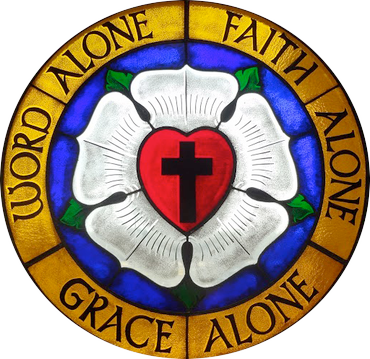
Chapter 26: When You Stumble — Confession, Absolution, and Rising Again
“If we confess our sins, he is faithful and just and will forgive us our sins and purify us from all unrighteousness.” — 1 John 1:9 (ESV)
The Chapter You Hoped You Wouldn’t Need
Let me speak to you plainly. If you are reading this chapter, one of two things has happened. Either you have slipped — you visited the online harem again, you consumed the supernormal stimuli, you fell back into the behavior you had resolved to leave behind — or you are reading ahead because you are afraid that you will slip and you want to know what happens if you do.
Both are fine. Both are human. And both need to hear what this chapter has to say.
But before I say anything else, let me say this: take a breath. You are going to be all right.
I am not minimizing what happened. If you slipped, that was a real sin with real consequences — neurological, relational, spiritual. I am not going to wave a hand and pretend it doesn’t matter. It matters. God’s Law still stands, and it still speaks truthfully about what pornography is and what it does.
But here is what I need you to hear even more urgently: a slip is not a relapse. A stumble is not a fall from a cliff. Tripping on the path does not mean the path has disappeared. You are still a baptized child of God. You are still forgiven. You are still free — yes, free, even right now, even with the shame sitting on your chest like a stone.
How can I say that? Because your freedom was never based on your perfect performance. It was based on Jesus’ perfect performance, delivered to you in the Gospel, sealed in your baptism, spoken over you in absolution. That foundation has not moved one inch. The cross did not wobble when you fell.
So let’s talk about what actually happened, why it happened, what to do about it, and why the devil is desperately hoping you won’t read the rest of this chapter.
What a Slip Actually Is
Remember the little monster and the big monster.
The little monster is the faint physical withdrawal — the mild, barely perceptible discomfort that lingers in the nervous system after you’ve stopped feeding it supernormal stimuli. It isn’t pain. It isn’t suffering. It’s more like a mosquito bite that occasionally itches. By itself, it’s almost nothing.
The big monster is the brainwashing — the network of false beliefs that interprets the little monster’s whisper as something meaningful: “You’re missing out.” “You need this.” “Just one peek.” “Life is less colorful without it.” The big monster turns a mosquito bite into what feels like a missing limb.
When you made your decision to stop, the big monster began to die. Every chapter you read, every false belief you dismantled, weakened it. By the time you made your solemn vow, the big monster was on life support.
But here is the thing about dying monsters: they thrash.
A slip typically happens when the big monster, in its death throes, manages one last convincing lie. Maybe it was “Just one peek won’t hurt.” Maybe it was “You deserve a reward — you’ve been so good.” Maybe it was “You’re so stressed right now, and nothing else will take the edge off.” Maybe it was subtler — not even a conscious thought, just an old habit pathway firing in a moment of boredom or exhaustion, and before your prefrontal cortex could engage, you were already reaching for the device.
Whatever the mechanism, here is what it was NOT:
It was NOT proof that you are a hopeless addict.
It was NOT evidence that the method doesn’t work.
It was NOT a sign that you were fooling yourself about being free.
It was NOT your true nature reasserting itself.
It was the death rattle of a parasite. A parasite that has been starving, that is weaker than it has ever been, and that used its last reserves of energy to trick you into feeding it one more time. Think of it like a tapeworm that is almost dead — it sends out one final desperate signal, and in a moment of weakness, you gave it a meal. That is all that happened.
The question now is not “Am I still free?” The question is: “Will I let this dying parasite convince me that it’s alive and well?”
The Devil’s Strategy After a Fall
Now we need to talk about the accuser. Because the moments after a slip are when he does his most insidious work.
Revelation 12:10 calls Satan “the accuser of our brothers and sisters, who accuses them before our God day and night.” John 8:44 calls him “the father of lies.” These are not contradictory titles — they describe a single strategy. The devil uses truth-adjacent accusations to deliver soul-destroying lies.
Here is how it works. You slip. You look at something you swore you wouldn’t look at. And immediately, the accuser is there. Not with horns and a pitchfork — that would be too obvious. He comes dressed in the robes of your own conscience. He speaks in your own internal voice. And he says things that sound like godly conviction but are actually crafted to destroy you:
“See? You’re no different. You’ll never change.”
“All that talk about freedom — what a joke. You’re exactly who you’ve always been.”
“God must be so disgusted with you right now.”
“You might as well give up. At least then you won’t be a hypocrite.”
“If you were really free, this wouldn’t have happened. Obviously the method doesn’t work for you.”
“You’ve ruined everything. You might as well go all in now — the damage is already done.”
Do you see what he’s doing? He’s taking a stumble and redefining it as an identity. He’s taking a moment of weakness and declaring it the permanent truth about who you are. He’s taking a single data point and extrapolating it to infinity.
This is his oldest trick. He did it in the Garden: “Did God actually say…?” He twisted a single question into the unraveling of creation. He did it with Jesus in the wilderness: “If you are the Son of God…” He tried to make the Son of God doubt His own identity based on present circumstances (hungry, alone, in the desert). And he does it with you: “If you were really free, if you were really God’s child, if you were really forgiven…”
He is lying. That is what he does. It is all he knows how to do. Jesus said he “has nothing to do with the truth, because there is no truth in him. When he lies, he speaks out of his own character, for he is a liar and the father of lies” (John 8:44).
The accusation — “You are defined by your sin” — is a lie. You are defined by your baptism. You are defined by Christ’s death and resurrection applied to you in water and the Word. The accuser wants to convince you that what you did is who you are. But doing something sinful does not make you “a sinner” in the sense he means — hopelessly, essentially, permanently identified with that sin. It makes you a baptized saint who sinned. There is an infinite difference.
Luther knew this adversary well. He reportedly said that when the devil came to accuse him, he would respond: “I am baptized!” Not “I am righteous” — Luther knew better than that. Not “I’ve been good lately” — that was never the point. Just: “I am baptized.” Because in baptism, God claimed him. God named him. God sealed him. And no amount of sin — no slip, no stumble, no catastrophic fall — can undo what God has done.
“Who shall bring any charge against God’s elect?” Paul asks in Romans 8:33. “It is God who justifies. Who is to condemn? Christ Jesus is the one who died — more than that, who was raised — who is at the right hand of God, who indeed is interceding for us.”
The accuser brings his charges. God dismisses the case. Not because you’re innocent — you’re not — but because the Judge Himself paid the penalty. The gavel has fallen. The verdict is in. And it is: forgiven.
The Gospel Response: What to Do When You Slip
So. You slipped. The accuser is screaming. Shame is burning in your gut. Here is what you do — step by step, in order.
Step One: Confess to God Immediately
Go to Him right now. Not tomorrow. Not after you’ve cleaned yourself up. Not after you’ve figured out what to say. Now.
He already knows. He is not surprised. He is not disgusted. He is not reconsidering His love for you. He forgave this particular sin two thousand years ago on a cross outside Jerusalem. Your confession is not informing God of something He didn’t know — it is agreeing with God about something He has always known, and receiving the forgiveness He has always offered.
“If we confess our sins, he is faithful and just and will forgive us our sins and purify us from all unrighteousness” (1 John 1:9). Notice the words: faithful and just. God’s forgiveness is not a bending of the rules. It is justice — because the penalty was paid in full by Christ. When God forgives you, He is being fair, because His Son already bore what you deserved. This is not cheap grace. It is the most expensive grace in the history of the universe — it cost God His only Son. But it is free to you. That’s the whole point.
Pray simply. You don’t need eloquence. “Father, I sinned. I looked at what I shouldn’t have looked at. I’m sorry. Forgive me for Jesus’ sake.” That’s enough. That’s more than enough. The tax collector in the temple said even less — “God, be merciful to me, a sinner!” — and Jesus said he went home justified (Luke 18:13-14).
Step Two: Do Not Wallow
This is critical. The devil has a backup plan for when confession works. If he can’t keep you from being forgiven, he’ll try to keep you from feeling forgiven. He wants you to sit in the ashes. He wants you to replay the sin in your mind over and over. He wants you to punish yourself with extended self-loathing. Why?
Because wallowing in guilt and shame triggers the exact same emotional desperation that drove you to porn in the first place. Remember the backward mechanism from Chapter 6? You feel terrible, so you seek comfort. The only “comfort” the addicted brain knows is the thing that caused the terrible feeling. Shame drives you back to porn. The devil knows this. That’s why he pushes the shame so hard. He’s not trying to make you holy — he’s trying to make you relapse.
So: confess, receive forgiveness, and get up. Peter sank in the waves, and Jesus immediately reached out His hand and caught him (Matthew 14:31). He didn’t let Peter thrash around in the water for a while to teach him a lesson. He pulled him up immediately. That is how God responds to a repentant sinner. Not with a lecture. Not with a probationary period. With an outstretched hand.
Step Three: Diagnose Without Condemning
Now — calmly, without self-hatred — ask yourself: what went wrong? This is not an exercise in self-punishment. It is an exercise in learning. A pilot who hits turbulence doesn’t spend three days hating himself. He reviews the flight data, identifies what happened, and adjusts.
Which instruction did you fail to follow? Here are the most common:
Did you entertain “just one peek”? This is the most frequent cause of a slip. The big monster whispered, and instead of recognizing the whisper for what it was — a dying parasite’s last gasp — you engaged with it. You debated. You negotiated. You opened the door “just a crack.” Go back and re-read the chapter on “Just One Peek.”
Did you doubt your decision? Did a part of you start wondering whether freedom was real, whether life without porn was sustainable, whether you were missing out? Doubt is the big monster’s oxygen. Cut it off. Your decision was correct. Nothing has changed that.
Did you mope instead of rejoice? Were you going through your days feeling deprived, like a person on a diet staring longingly at cake? If so, you hadn’t fully killed the big monster. You were still believing, somewhere deep down, that porn offered something of value. It doesn’t. Go back to the chapters that expose the illusion.
Did you neglect the means of grace? Had you stopped reading Scripture? Skipped church? Avoided the Lord’s Supper? Isolated yourself from other Christians? The means of grace are not optional accessories for the Christian life — they are the delivery system for God’s power. Without them, you are fighting the devil, the world, and the sinful flesh with nothing but your own willpower. And your willpower is a water pistol at a five-alarm fire.
Were you hungry, angry, lonely, or tired? These are not moral failures — they are physiological states that weaken your prefrontal cortex and strengthen old habit loops. Take care of your body. Sleep. Eat. Connect with people. These are not spiritual compromises — they are stewardship of the temple God gave you.
Identify what happened. Make a note of it. And move on.
Step Four: Re-Read and Rebuild
Go back to the relevant chapters. Each reading strengthens the conceptualization — the mental framework that sees porn for what it truly is. The big monster was weakened but not quite dead. The slip tells you where a pocket of brainwashing survived. Find it. Expose it. Kill it.
This is not starting over. You are not back at square one. You are a student who missed one question on the exam and is now reviewing that specific material. The rest of your knowledge is intact. You just need to shore up one weak spot.
Lutheran Confession and Absolution — The Treasure You Must Not Neglect
Now I want to talk about one of the greatest gifts God has given to His Church — and one of the least used in most Lutheran congregations. I’m talking about private confession and absolution.
Martin Luther, when he reformed the church, threw out many things that Rome had added to the Christian faith. Indulgences — gone. Mandatory auricular confession as a condition for salvation — gone. The entire penitential system of penances, satisfactions, and purgatorial suffering — gone. He saw clearly that these things had turned confession into a burden, a source of terror, and a tool of spiritual manipulation.
But Luther did not throw out private confession itself. He kept it. He treasured it. He practiced it throughout his life. And in the Small Catechism — that little book he wrote so that ordinary Christians would know the basics of the faith — he devoted an entire section to confession. Not because confession earns forgiveness, but because confession receives it.
Here is what Luther wrote:
“What is Confession? Confession has two parts. First, that we confess our sins, and second, that we receive absolution, that is, forgiveness, from the pastor as from God Himself, and in no way doubt, but firmly believe that by it our sins are forgiven before God in heaven.”
Read that again carefully. As from God Himself. When your pastor speaks the words of absolution — “I, by the command of our Lord Jesus Christ, forgive you all your sins in the name of the Father and of the Son and of the Holy Spirit” — those are not the pastor’s words. They are God’s words, spoken through human lips, delivered to human ears, applied to a specific human heart. The pastor is not offering his opinion about your spiritual state. He is not guessing that God probably forgives you. He is pronouncing — authoritatively, by the command of Christ Himself — that your sins are forgiven. Done. Finished. As certainly as if Christ were standing in front of you saying it Himself.
This is what Christ instituted when He breathed on His disciples and said, “Receive the Holy Spirit. If you forgive the sins of any, they are forgiven them” (John 20:22-23). This is the Office of the Keys — the authority Christ gave His Church to forgive sins in His name. It is not magic. It is not a human invention. It is God’s own mechanism for delivering His forgiveness to specific, struggling, burdened sinners who need to hear it spoken to them.
Luther continued in the Small Catechism:
“Before God we should plead guilty of all sins, even those we are not aware of, as we do in the Lord’s Prayer; but before the confessor we should confess only those sins which we know and feel in our hearts.”
This is liberating. You don’t need to enumerate every lustful thought from the past six months. You don’t need to produce a comprehensive accounting of every failure. You confess what weighs on you — what you know and feel in your heart. And that is enough. Because the absolution covers all of it — known and unknown, confessed and forgotten, the sins you can name and the sins you can’t.
Now here is my pastoral plea to you: go to your pastor.
I know this feels terrifying. I know you imagine the look on his face — the shock, the disappointment, the judgment. Let me tell you something from long experience in the church: your pastor has heard it all. He has heard confessions that would make your story sound mild. He has heard from deacons and elders and Sunday school teachers and fellow pastors. He is not going to faint. He is not going to think less of you. He is trained, ordained, and called precisely for this purpose — to speak Christ’s forgiveness to sinners. That is his job. That is his joy.
And you need to hear it. You need to hear those words spoken aloud, in a real voice, directed at you by name: “I forgive you all your sins.” Not in the abstract. Not in a sermon addressed to the whole congregation. Not in a devotional book that uses the second person plural. You need someone to look you in the eye and speak the Gospel to you. This is what ears are for. This is what the Office of the Ministry exists for. Use it.
James 5:16 says, “Confess your sins to each other and pray for each other so that you may be healed.” The Greek verb here — exomologeisthe — is in the present tense, implying continuous action. Keep confessing. Not once. Not just when you have a catastrophic fall. Regularly. As a practice. As a discipline of grace. Not because God requires repeated confessions to keep forgiving you (He doesn’t), but because you need repeated reminders that you are forgiven. The old Adam keeps surfacing. The absolution keeps drowning him. This is the rhythm of the baptismal life.
Find a pastor you trust. Make an appointment. Say the hardest sentence — “Pastor, I struggle with pornography” — and then let the Gospel do its work. That first sentence is the hardest thing you’ll ever say. Everything after it is relief.
The “Wanting It to Hurt” Trap
There is a peculiar temptation that afflicts religious people in particular, and I need to address it here because it may be sabotaging your freedom without you even realizing it.
Some Christians, when they begin to experience the ease of this method — when they find that quitting isn’t the white-knuckle agony they expected — feel guilty about the ease. They feel like they should be suffering more. They think, “If I’m not struggling, I must not be taking this seriously. Real repentance should hurt. I should be crawling on broken glass, not smiling.”
This is the little monster wearing a religious costume.
Think about what’s happening here. The brainwashing has been so thorough that even the escape from brainwashing gets reinterpreted through a distorted lens. The thought process goes something like this: “Sin is serious. Therefore quitting sin should be painful. If quitting isn’t painful, I must be doing something wrong. Maybe I need to make it harder. Maybe I need to add some suffering, some self-denial, some prolonged guilt, to make this feel legitimate.”
This is works-righteousness applied to addiction recovery. It’s the idea that your suffering contributes to your salvation — that you need to add your pain to Christ’s pain to make the atonement “complete.” But the atonement is already complete. “It is finished,” Jesus said (John 19:30). Finished. Not “mostly finished, pending your contribution of adequate suffering.” Finished. Done. Paid in full.
“By grace you have been saved through faith. And this is not your own doing; it is the gift of God, not a result of works, so that no one may boast” (Ephesians 2:8-9). This applies to your initial salvation, and it applies to your freedom from porn. Grace means gift. A gift is received, not earned. You don’t earn a gift by making yourself miserable enough to deserve it. You receive it with open hands and a grateful heart.
Easy freedom is not a moral failing. It is not a sign of shallow repentance. It is what happens when you receive a gift of God with the simplicity of a child. “Truly, I say to you, unless you turn and become like children, you will never enter the kingdom of heaven” (Matthew 18:3). Children don’t feel guilty about receiving Christmas presents easily. They tear off the wrapping paper with pure joy. That’s the right response to a gift.
If quitting feels easy, rejoice. That’s the whole point. That’s the method working. That’s the Gospel doing what the Gospel does — delivering freedom, not as wages earned through suffering, but as a gift given through grace.
Luther on the Daily Drowning of the Old Adam
In the Small Catechism, under the section on Baptism, Luther asks a profound question: “What does such baptizing with water indicate?”
His answer: “It indicates that the Old Adam in us should by daily contrition and repentance be drowned and die with all sins and evil desires, and that a new man should daily emerge and arise, who shall live before God in righteousness and purity forever.”
Daily. Not once. Not at conversion. Daily.
This means that the Christian life is, by design, a life of repeated dying and rising. Every day, the old Adam surfaces — with his old desires, old habits, old patterns, old lies. And every day, the old Adam is drowned again in the waters of baptism through repentance and faith. And every day, the new man rises — cleansed, forgiven, free.
A slip, then, is not a catastrophe that falls outside the scope of God’s plan. It is one more occasion for the old Adam to be drowned. The old Adam surfaced — as old Adams do — and made a grab for the controls. He found a moment of weakness and he exploited it. That’s what old Adams do. But he has already been sentenced to death. His execution was accomplished at Calvary and applied to you at the font. He is a dead man walking. Every time he surfaces, you drown him again. Not by your own power, but by the power of the baptismal promise.
“Do you not know that all of us who have been baptized into Christ Jesus were baptized into his death? We were buried therefore with him by baptism into death, in order that, just as Christ was raised from the dead by the glory of the Father, we too might walk in newness of life” (Romans 6:3-4).
Your baptism is not a memory. It is a present-tense reality. The death and resurrection that happened in that water continue to operate in your life today. The old Adam died there. The new man was born there. And every time you confess your sin and receive forgiveness, you are returning to those waters. You are re-entering the death and resurrection of Christ. The old Adam goes under. The new man comes up.
So: you slipped. The old Adam surfaced. Very well. Drown him again. Confess. Receive absolution. Rise. Walk forward. You are not starting over — you are continuing the daily pattern that Luther described. This is normal Christian life. Not ideal, perhaps. Not the plan. But covered, fully and completely, by the grace of God in Christ.
You Are Not Your Urge
Let me say something important about identity, because the moments after a slip are when your sense of identity is most vulnerable.
When you slipped, the accuser whispered: “This is who you really are.” And it felt true. It felt like the mask had come off, like the freedom was the facade and the addiction was the reality, like the new man was the costume and the old man was the true self underneath.
That is backwards. The old man is the impostor. The new man is the real you — the you that God created, the you that God redeemed, the you that God is sanctifying. The urge that led to the slip does not belong to you — it belongs to the dying little monster. It is a parasite, not your identity. A parasite lives in you, feeds on you, and tries to convince you that it is you. But it is not. You are a baptized child of God. The monster is a squatter in a house that belongs to Christ. And squatters, once identified, get evicted.
The urge you felt before the slip was the little monster sending its signal. The interpretation of that signal — “I need this, I want this, this will help me” — was the big monster’s brainwashing, its last gasp. And the act of giving in was the old Adam making one more desperate play before he goes under the water again.
None of that is you. You are the one who reads this book. You are the one who made the decision to be free. You are the one who, right now, is picking yourself up and moving forward. That person — the one choosing freedom — is the real you. The baptized you. The you that will outlast the parasite, the brainwashing, and the old Adam combined.
The Neuroscience of a Slip: Why It’s Not as Bad as You Think
Let me give you some very good news from brain science.
A single slip does NOT reset your neurological progress to zero. This is one of the most important things you can understand right now, because the big monster is trying to convince you that everything is ruined — that you’re back at square one, that all the healing is undone, that you might as well binge because the damage is already done.
That is a lie, and the science proves it.
Here is what happens in the brain during recovery from pornography use:
Dopamine receptor upregulation — your D2 receptors, which were downregulated by the constant supernormal stimulation, begin to recover. They become more sensitive again. This process takes weeks to months, and it proceeds gradually.
Prefrontal cortex strengthening — the “brakes” of your brain, which were weakened by hypofrontality (the erosion of executive function caused by chronic overconsumption), begin to rebuild. Neural connections in the prefrontal cortex thicken and strengthen. This process is gradual and cumulative.
Desensitization reversal — your brain’s reward circuitry, which had become numb to normal stimuli, begins to recalibrate. Ordinary pleasures — a good meal, a sunset, a conversation, physical affection with a spouse — begin to register as genuinely pleasurable again. This happens over weeks and months.
Sensitized pathway weakening — the “water slide” pathways that had been carved by years of porn use begin to dry up. Without regular activation, these neural pathways weaken through a process called synaptic pruning. The less you use them, the weaker they get.
Now: a single slip re-activates some of these old pathways. It sends a burst of dopamine through the sensitized circuits. It re-greases the water slide, so to speak. This is real, and I won’t minimize it.
But here’s the critical point: it does not undo the receptor recovery, the prefrontal strengthening, or the desensitization reversal that has already occurred. Those are cumulative biological processes. They don’t evaporate because of one episode. Think of it this way: if you’ve been exercising for three months and you skip a day, you don’t lose all your muscle. If you’ve been learning a language for six months and you have one day where you can’t remember a word, you haven’t unlearned the language. One bad day does not erase months of progress.
The neural pathways that were weakening will be slightly re-strengthened by a single slip. But “slightly” is the key word. One activation in the context of weeks or months of abstinence is a blip, not a catastrophe. Get back on track immediately, and the setback is minimal. The pathways will resume weakening. The receptors will continue recovering. The prefrontal cortex will keep strengthening.
But here is the critical warning — and I need you to hear this with absolute clarity:
The worst thing you can do after a slip is binge.
“Well, I already failed, so I might as well go all in.” “The damage is done — one more session won’t make a difference.” “I’ll start again tomorrow.” These thoughts are the big monster’s final, desperate, nuclear option. Because while a single slip barely dents your neurological progress, a binge — hours or days of renewed consumption — DOES cause significant re-sensitization, receptor downregulation, and prefrontal weakening. A binge can set you back weeks or even months.
The difference is enormous. A single slip is like stepping off the path for one stride and immediately stepping back on. A binge is like turning around and running back the way you came. The distance matters. The duration matters. The intensity matters.
So: if you slipped, stop. Right now. Not after one more video. Not after one more session. Right now. Close the browser. Put down the phone. Walk away. The total neurological cost of a single slip is almost negligible. The cost of what happens in the next ten minutes could be enormous. This is the most important decision you will make today: stop now.
The Backward Mechanism Revisited
Remember Chapter 6? The backward mechanism is the diabolical cycle at the heart of addiction: the thing that causes the misery is perceived as the relief from the misery. You feel awful because of porn, so you use porn to feel less awful. The cigarette creates the stress, then partially relieves it, and the smoker thinks the cigarette is helping with stress.
After a slip, this mechanism is working overtime. Here’s the sequence:
- You slip. You view pornography.
- Immediately after, you feel guilt, shame, self-disgust.
- These feelings are intensely uncomfortable. Your brain is now in a state of emotional distress.
- Your brain, trained by years of habit, knows one reliable way to escape emotional distress: pornography.
- The temptation to use again — to binge — comes not despite the guilt but because of it. The guilt drives you back.
- If you give in, the cycle accelerates. More use, more guilt, more use, more guilt.
This is what the devil is counting on. He doesn’t need you to enjoy the binge. He just needs the guilt from the slip to be painful enough that you seek escape — and painful enough that the only escape you can imagine is the thing that caused the pain.
But you know better now. You can see the mechanism. You can name it. And naming it breaks its power. When you feel the pull to binge after a slip, recognize it: “This is the backward mechanism. The guilt I’m feeling is driving me toward the very thing that caused the guilt. I see you. I name you. And I refuse to play.”
Confess. Receive forgiveness. Let the guilt go — it has been taken from you by Christ. And with the guilt gone, the backward mechanism has no fuel. The pull to binge evaporates. You are free to get up and walk forward.
A Word on the “Reset Counter” Mentality
Many recovery programs and apps use a “days sober” counter. The idea is motivational — you watch the number climb and feel proud of your progress. But there is a devastating side effect: when you slip, the counter goes back to zero. And with it, psychologically, goes all your perceived progress.
This is catastrophic for recovery. The man who was on day 90 and slipped once is told — by the counter, by the app, by the culture — that he is now at day zero. The same as someone who just started. The same as someone who never tried. Ninety days of real, substantive neurological healing, spiritual growth, and habitual change are psychologically erased by a number on a screen.
The counter does not reflect neurological reality. Your brain on day 91 after a slip on day 90 is nothing like your brain on day 1. You have months of receptor recovery, prefrontal strengthening, and pathway weakening that are largely intact. But the counter tells you otherwise, and the big monster seizes on this: “See? You’re back at zero. All that progress — wasted. You might as well give up.”
I encourage you to abandon the counter mentality entirely. You are not collecting days like coins in a jar, where one mistake shatters the jar and scatters the coins. You are healing, like a broken bone knitting itself back together. If you bump the bone on day 90, it hurts, and it may slow the healing slightly. But the bone does not re-break completely. The ninety days of healing are still there, still real, still doing their work.
Your identity is not “a person who is X days clean.” Your identity is “a baptized child of God who is free.” The first identity is fragile — one slip destroys it. The second identity is unshakeable — founded on the rock of Christ’s finished work, not on your streak.
Rising Again
Let me draw this together.
You stumbled. Or you’re afraid of stumbling. Either way, here is the truth:
God is not surprised. God is not disgusted. God is not tired of you. The cross was not a one-time offer that expires after too many failures. “His mercies never come to an end; they are new every morning” (Lamentations 3:22-23). Every morning. Not every morning until you’ve used up your allotment. Every morning, period, without qualification, without limit, without a counter that resets.
You are baptized. That hasn’t changed. You are forgiven. That hasn’t changed. You are loved. That hasn’t changed. You are free. Yes — even after a slip — you are free. Because freedom was never about your perfect performance. It was always about God’s perfect gift.
Luther said, “This life therefore is not righteousness but growth in righteousness, not health but healing, not being but becoming, not rest but exercise. We are not yet what we shall be, but we are growing toward it. The process is not yet finished but it is going on. This is not the end but it is the road.”
You are on the road. You tripped. The road is still there. Get up. Keep walking. The destination hasn’t moved.
And remember: Hallelujah! I’m free! A stumble doesn’t change that. The monster is still dying. You are still rising. Christ is still on His throne. And you — you, specifically, you who are reading these words with shame on your face and hope in your heart — you are still His.
A Prayer for After a Fall
Heavenly Father, I have sinned against You. I returned to what I had left behind. I fed the monster I swore to starve. I am sorry — not with the desperate guilt that drives me back to sin, but with the honest sorrow of a child who has disappointed his Father and knows it.
But You are faithful and just. You forgive my sin — not because I deserve forgiveness, but because Christ earned it for me. His blood covers this. His cross was for this. His resurrection proves that not even death can separate me from Your love.
I drown the old Adam again today. I return to my baptism. I am Yours — not because I am strong, but because You are faithful. The little monster is dying. The big monster is lying. And You, Lord, are the truth.
Pick me up. Set my feet on the path. And let me walk forward — not in shame, but in the freedom Christ has won for me.
In the name of the Father and of the Son and of the Holy Spirit. Amen.
“The righteous falls seven times and rises again.” — Proverbs 24:16
The rising is not your work. The rising is His.