Chapter 24: Freedom Is a Promise, Not a Feeling
“Then their eyes were opened, and they recognized him.” — Luke 24:31 (ESV)
Here is the most important thing this chapter will tell you: your freedom does not depend on how you feel.
You may wake up one morning and realize the cravings are gone. You may notice, weeks from now, that a situation that used to be a trigger now carries no weight at all. You may experience a quiet sense of relief, or even joy, as your brain heals and normal pleasures become vivid again.
Or you may not. The healing may be so gradual that there is no single moment to point to. You may simply look back months from now and realize, almost as an afterthought, that pornography stopped mattering to you somewhere along the way.
Either way — dramatic moment or quiet fade — the truth is the same: you are free because Christ says so, because pornography gives you nothing, and because the Word of God is trustworthy whether you feel it or not.
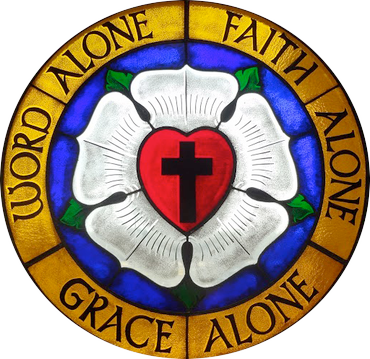
Faith clings to the promise, not to the experience. This is as true for freedom from pornography as it is for justification itself. Luther did not say, “I am righteous because I feel righteous.” He said, “I am righteous because Christ’s righteousness is mine, given freely, received through faith.” Your freedom has the same shape. It rests on what is objectively true, not on what you subjectively feel on any given Tuesday.
What Healing Looks Like
As your brain heals — and it will heal — you may notice changes. Many people do. But these are consequences of freedom, not proof of it. Your freedom was real from the moment the truth took hold. The healing is simply your brain catching up with reality.
Think of it this way. When you cut off the blood supply to a tumor, the tumor begins to die immediately. But you might not feel the difference for weeks. The dying process is happening — the tumor is shrinking, the healthy tissue is recovering — but it’s happening below the threshold of conscious awareness. Then one day, the pain that had been constant suddenly… isn’t there.
That experience — noticing the absence of what used to dominate your life — is a gift. But it is not the foundation of your freedom. The foundation is the truth: pornography gives you nothing, Christ gives you everything, and the Word that declares you free is more reliable than any feeling you will ever have.
Do Not Wait for a Feeling
This is critical: do not monitor your feelings to determine whether you are free.
If you spend every day checking your internal state — “Am I free yet? Do I feel free? Have the cravings stopped?” — you are keeping your mind fixated on the very thing you’re leaving behind. The watched pot never boils, and the monitored mind never rests.
Instead, live your life. Go to work. See friends. Read books. Take walks. Play with your kids. Attend church. Receive the Sacrament. Do the laundry. Cook dinner. Live the ordinary, beautiful, messy, mundane life that God has given you. Trust the promise. Trust the Word. Trust your Baptism. The feelings will sort themselves out — or they won’t. It doesn’t matter. You are free either way.
This is, incidentally, very Lutheran. Luther had a deep suspicion of spiritual pyrotechnics — of manufactured religious experiences, of the “enthusiasts” who sought direct revelations and ecstatic states. Luther trusted the ordinary means of grace: the Word read and preached, the water of Baptism, the bread and wine of the Lord’s Supper. God works through ordinary things. Your brain healing while you go about your daily life, sustained by Word and Sacrament, is exactly how God tends to operate. Don’t look for fireworks. Trust the promise.
Why Willpower Quitters Rarely Experience This
People who quit through willpower — through gritting their teeth and enduring the deprivation — rarely experience lasting peace. The reason is straightforward: they never stopped believing the lie.
The willpower quitter still believes, at some level, that porn provides something real. They believe they’re making a sacrifice. They believe that life without porn is life with a missing piece. And because they believe this, they are perpetually in a state of surviving without rather than thriving without. They’re always aware of the absence. They’re always conscious of what they’ve “given up.” The mental energy they spend resisting the craving keeps the craving alive in their minds.
For the willpower quitter, the three-week mark doesn’t bring peace — it brings exhaustion. They’ve been fighting for three weeks, and the fight has worn them down. They’re tired of resisting. They’re tired of thinking about porn constantly (which is what happens when you’re constantly trying not to think about it). They’re tired of the whole ordeal.
And because they never stopped believing the lie — because they still think they gave up something valuable — they remain vulnerable. Months later, years later, in a moment of stress or weakness, the Big Monster can still whisper: “Remember what you gave up? Remember how hard it was? Don’t you want it back?”
This is why the truth matters. Not just the decision, but the understanding behind the decision. When the brainwashing is removed — when you genuinely see that porn gives you nothing — the lie loses its power. Your brain heals, your mind clears, and the whisper of the Big Monster falls flat, because you know it’s lying.
General Timelines (Handle with Care)
I offer these timelines with a strong caveat: they are generalizations, not guarantees. Every brain is different. Every history of use is different. Do not treat these as milestones to check off or deadlines to meet. They are simply descriptions of what many ex-users report.
Around five days: Porn ceases to be the primary occupation of your mind. During the first few days, you may find your thoughts returning to it frequently — not because you want it, but because the neural pathways are still firing automatically. By day five, these automatic firings have diminished significantly. Porn becomes a background thought rather than a foreground preoccupation. You start having long stretches — hours at a time — where it simply doesn’t come up.
Around three weeks: The acute withdrawal is essentially complete. Dopamine receptors have substantially recovered. The sensitized pathways have weakened considerably through non-reinforcement. The prefrontal cortex is functioning markedly better. The brain’s “prediction” of porn-related rewards — the cue-triggered dopamine release that used to fire in response to triggers — has been largely extinguished. Many people notice a significant shift around this time. Some don’t. Both are normal.
Beyond three weeks: Continued neurological healing. DeltaFosB levels continue declining (half-life of six to eight weeks). Sensitized pathways continue weakening. New, healthier neural patterns continue strengthening. Many ex-users report that their appreciation for normal pleasures continues deepening for months after quitting, because the brain’s recovery is a gradual, ongoing process with continuing benefits.
I’ll say it one more time: don’t watch the calendar. If day twenty-one comes and you don’t feel dramatically different, it means nothing. The healing is happening whether you feel it or not — just as Christ’s promises are true whether you feel them or not. Live your life, receive the means of grace, and trust the Word.
The Neurological Reality of the Moment
For those who appreciate understanding the mechanism, here is what is likely happening in your brain at and around the moment of revelation.
Dopamine receptor density has significantly recovered. Your brain has upregulated — increased the number and sensitivity of its dopamine receptors — in response to the absence of artificial stimulation. This means normal stimuli now produce normal dopamine responses again. A sunset, a good meal, a laugh with a friend — these things register on your reward system with appropriate intensity. The world is vivid again because your brain can actually detect the signal.
Natural reward sensitivity has improved. Related to the above, but broader: your entire hedonic tone — your baseline capacity for pleasure — has risen back toward its natural set point. The chronic, low-grade anhedonia (inability to feel pleasure) that characterizes active addiction has lifted. Things feel good again, in a way they haven’t for a long time.
Sensitized pathways have weakened substantially. The deep grooves carved by repeated porn use — the neural highways that connected cues to cravings to behavior — have eroded through non-use. The signals they send are fainter. The automatic urgency they once carried is diminished. A trigger that would have sent you scrambling two months ago now produces a faint, easily dismissed flicker.
Prefrontal cortex function is markedly improved. Your executive function — the brain’s CEO, responsible for planning, impulse control, and rational evaluation — is operating more effectively. The hypofrontality induced by chronic addiction has substantially reversed. You can think more clearly, evaluate options more rationally, and override impulses more easily. You feel, in a real and neurological sense, more like yourself.
The brain’s predictive model has updated. Your brain is constantly generating predictions about what will happen next. During active addiction, the brain predicted that certain cues (boredom, stress, alone time) would lead to porn use, and it pre-released dopamine in anticipation. This anticipatory dopamine was part of the craving experience. Through repeated non-reinforcement — through the cue occurring without the predicted outcome following — the brain’s predictive model has updated. It no longer expects porn. The anticipatory dopamine no longer fires. The craving simply… isn’t generated.
The result of all this is simple: the craving machine winds down. Not suppressed, not overridden, not white-knuckled into silence — wound down. The machinery stops running. You may notice this dramatically, or you may notice it gradually, or you may simply realize one day that you haven’t thought about pornography in weeks. However it comes, it is the natural consequence of a brain healing from a lie it no longer believes.
The Danger: The Three-Week “Proof” Trap
I need to warn you about a specific and insidious trap that tends to spring at exactly this point in the journey. It catches intelligent, successful quitters — people who did everything right, who understood the method, who were doing well — and it drags them back into the pit. Remember: the old Adam never stops trying to crawl out of the waters of Baptism.
Here’s how it works.
Around the three-week mark — maybe a little before, maybe a little after — you feel great. The withdrawal is gone. The triggers are fading. Normal pleasures are vivid again. You feel confident, clear-headed, free. And in that moment of strength and clarity, a thought surfaces:
“I’ve beaten it. I’m free. And it was easy, just like the book said. I bet I could have one peek and it wouldn’t even affect me. In fact, let me prove it — I’ll look at something, and when I feel nothing, that’ll prove once and for all that I’m free.”
This reasoning sounds logical. It feels empowering. It is catastrophically wrong.
Here’s what actually happens. You peek. The sensitized pathways — dormant but not dead — light up. Dopamine floods down the old grooves. DeltaFosB begins accumulating. The little monster, which was nearly starved to death, gets a meal. And the craving returns — not at the level it was at your worst, but strong enough to demand another peek. And another. And another.
Within days — sometimes hours — you’re back in the trap. And the worst part is the confusion: “How did this happen? I was free! I understood the method! I didn’t even enjoy the peek!” You didn’t enjoy it because you’re right — porn gives you nothing. But the neurological machinery doesn’t care about your philosophical insights. It responds to stimuli. You gave it a stimulus. It responded.
The rule is absolute: not one peek, not ever, not for any reason.
Not to “prove” you’re free. (You don’t need to prove it. You know it.) Not to “test” your progress. (Healing isn’t tested by re-injuring yourself.) Not because you’re curious whether it still “works.” (It doesn’t “work” — it never did.) Not for any reason whatsoever.
This rule is not a burden. It is the simplest, most liberating boundary you will ever set. You never have to agonize over “Can I handle it?” You never have to negotiate with the Big Monster about “just this once.” The answer is always the same, it requires zero willpower, and it eliminates the entire category of temptation: no. Not because I’m depriving myself, but because there is nothing there for me.
The Emmaus Road
Now let us turn to the Scriptures, because what we’ve been describing has a profound theological parallel in one of the most beautiful narratives in the Gospels.
On the first Easter afternoon, two disciples were walking from Jerusalem to the village of Emmaus, a journey of about seven miles. They were devastated. Jesus — their teacher, their hope, the one they believed was the Messiah — had been crucified three days before. Their world had collapsed. Everything they believed had, apparently, been proven wrong.
As they walked, a stranger joined them on the road. He asked what they were discussing. They were astonished: “Are you the only visitor to Jerusalem who does not know the things that have happened there in these days?” They told him about Jesus, about the crucifixion, about the empty tomb that some women had reported that morning — a report they couldn’t quite bring themselves to believe.
The stranger — who was, of course, Jesus Himself — began to explain the Scriptures to them. Starting with Moses and all the prophets, He showed them how everything pointed to this: that the Christ had to suffer and die and rise again. Their hearts burned within them as He spoke. The truth was being laid out, layer by layer, but they didn’t yet see it.
Then, at dinner, Jesus took bread, blessed it, broke it, and gave it to them.
“Then their eyes were opened, and they recognized him.”
In an instant, everything that had been true all along became visible. Jesus had been walking with them the entire time. The truth had been spoken to them for hours. But it wasn’t until that moment — that sudden, unmanufacturable moment of recognition — that they saw.
Notice what happened on the Emmaus Road. The disciples’ eyes were not opened by their own effort or by waiting for the right feeling. Their eyes were opened by Christ — through the Word (He explained the Scriptures) and through the Sacrament (He broke the bread). The truth had been present the entire time. Christ had been walking with them the whole way. But they did not need to feel His presence for it to be real. He was there whether they recognized Him or not.
This is your freedom. The truth has been present the entire time. From the moment the truth took hold, you were free. From the first day, your brain was healing. From the first hour, the little monster was starving. Christ has been walking with you the whole way — in His Word, in your Baptism, in the Supper, in the quiet sustaining of the Spirit. The freedom was real before you felt it. The healing was underway before you noticed it. And if you never have a dramatic “moment” — if the healing is so gradual that you cannot point to a single day — your freedom is no less real.
The Emmaus disciples had a beautiful response. They didn’t pat themselves on the back. They didn’t post their streak count on social media. They said: “Did not our hearts burn within us while he talked to us on the road, while he opened to us the Scriptures?” And then they got up and ran — ran — back to Jerusalem to tell the others.
They were filled not with pride but with wonder. Not with self-congratulation but with gratitude. Their response was not “Look what I did” but “Look what He did.”
Let your response be the same. Whether freedom comes as a sudden recognition or a slow dawn, don’t turn it into an achievement. Turn it into thanksgiving. And keep receiving the means of grace — the Word, Baptism, the Supper, Absolution — because your freedom is sustained by Christ, not by your feelings about Christ.
Luther’s Tower Experience
There is another historical parallel that illuminates this moment with remarkable precision.
For years, the young Martin Luther was tormented by a phrase in Romans 1:17: “the righteousness of God.” He understood this as God’s active, punishing righteousness — the righteousness by which God judges and condemns sinners. And since Luther knew himself to be a sinner, this phrase filled him with dread. He prayed. He fasted. He confessed. He tried every work of devotion the medieval church offered. Nothing brought peace, because the harder he tried to be righteous, the more clearly he saw his unrighteousness.
Then, in what he later called his Turmerlebnis — his “tower experience” — something broke through. He was studying Romans 1:17 yet again, and suddenly he saw it: “the righteousness of God” is not God’s punishing righteousness. It is God’s gift of righteousness — the righteousness that God freely gives to sinners through faith in Jesus Christ.
Luther described the moment: “I felt that I was altogether born again and had entered paradise itself through open gates.” The text hadn’t changed. The truth had been there the whole time, embedded in the words he’d been reading for years. But in that moment, his eyes were opened. He saw what he couldn’t see before.
Luther’s struggle with Romans 1:17 is, in miniature, every Christian’s struggle with every form of bondage. We try and try and try — white-knuckling our way toward righteousness — and the trying itself prevents us from seeing the gift. Then, when we finally stop trying and simply see — when we recognize that the righteousness we were killing ourselves to achieve was already given, freely, for Christ’s sake, through faith — everything changes.
Your experience may echo Luther’s — a sudden breakthrough of clarity. Or it may come gradually, like dawn rather than a light switch. Or it may be so quiet you barely notice it happened. Either way, the truth was always there: porn gives you nothing, Christ gives you everything, and the Word of God is true whether your heart is burning or not.
Living in the Truth
One more thing before we close this chapter. Freedom is not a destination you arrive at and then stop walking. Life continues, and the Christian life has its own character: simul justus et peccator — simultaneously saint and sinner, free in Christ and still battling the flesh, all the way to the resurrection.
As your brain heals, you will likely find that your relationship with the world shifts. Not dramatically — you’re not a different person — but subtly and pervasively. Colors are a little brighter. Pleasures are a little more vivid. Relationships are a little deeper. Your mind is a little clearer. Your conscience is a little lighter. The low-grade shame that had been a constant background hum for years lifts.
You will find that you think about porn less and less. In the first days, it occupied a significant portion of your mental bandwidth. Over time, it recedes to the margins and eventually drops off the edge. Months from now, you’ll go weeks without thinking about it at all. And when a thought does surface — triggered by a random association, a news story, an old bookmark you forgot to delete — it will carry no emotional weight. No craving. No longing. Just a quiet recognition: “Oh, right. I used to do that. How strange. How pointless.”
But remember: the old Adam remains. He is drowned daily in Baptism, but he keeps trying to surface. This is why you continue to receive the means of grace. This is why the “no peek” rule is absolute. Not because your freedom is fragile, but because the sinful nature is persistent. You are free and you are a sinner. Both are true. Holding that tension is not a sign of weak faith — it is the normal Christian life.
Live in freedom. Enjoy it. Be grateful for it. Keep receiving Word and Sacrament. And when you see others still trapped — and you will — look on them not with judgment but with compassion. You were where they are. You know the trap from the inside. And you know the way out. If the opportunity arises, gently, humbly, without self-righteousness, point them toward the truth.
Because the truth sets free. It always has. It always will.
A Prayer
Lord Jesus, You walked with the disciples on the road to Emmaus before they recognized You. You walked with Luther through years of struggle before the truth broke through. And You are walking with me now — in Your Word, in my Baptism, in the quiet work of Your Spirit in my healing brain. I do not demand a dramatic feeling. I do not require a sign. I trust Your promise whether I feel it or not: “You will know the truth, and the truth will set you free.” Your Word is enough. My Baptism is enough. Your body and blood are enough. Keep me in the truth, sustain me through Your means of grace, and drown the old Adam daily. And whatever freedom looks like — sudden or gradual, dramatic or quiet — let my first word be not “I did it” but “Thank You.” In Your holy name. Amen.